Businesses and organisations need people with different interests, experiences and ways of thinking to help them succeed. That’s why the accountancy profession welcomes people from a wide range of backgrounds.
There are several routes to becoming a chartered accountant. Whether you’re finishing school, studying at university, or already working and thinking about a career change, there are pathways that can help you get there.
A common myth is that you need a degree in accounting or finance to work in the profession. In reality, many employers welcome applicants from all subject backgrounds. People who studied arts, humanities, sciences, engineering and many other disciplines have all gone on to build successful careers in accountancy.
While an interest in numbers can be helpful, accountancy is about much more than maths. Employers also value skills such as communication, problem-solving, teamwork and curiosity. Being able to understand a business, explain ideas clearly and work well with others is just as important as working with figures.
People from different academic and professional backgrounds often bring valuable perspectives to the role. Arts and humanities graduates, for example, often bring strong communication and analytical skills. Science and engineering graduates may enjoy applying logical thinking and problem-solving to real business challenges. These varied perspectives help the profession better support the organisations it works with.
In fact, 68% of our current students who hold a degree did not study accounting and finance at university.*
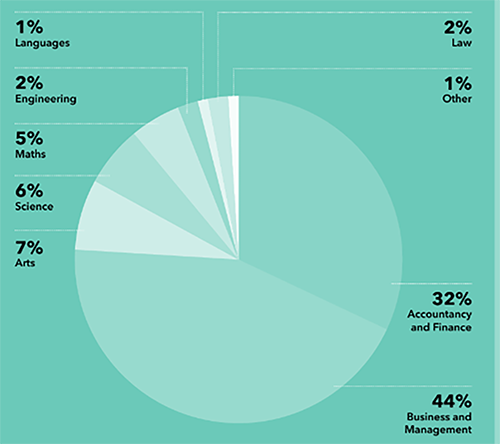
*UK ACA students in a training agreement.
Different ways to get started
As a graduate
There are multiple ways to begin your journey towards becoming a chartered accountant.
If you’re at university or already have a degree, many employers offer graduate programmes that allow you to work while training for a professional qualification.
As a school leaver
If you’d prefer to start your career straight after school, some employers offer school-leaver programmes or apprenticeships. These combine practical work experience with structured learning, allowing you to earn while you train.
Whichever route you take, the most important thing employers look for is potential. They want people who are motivated, curious about industry, and ready to learn and develop.
A career with many possibilities
The accountancy profession includes people with a wide variety of backgrounds and interests. What they share is a desire to help organisations make informed decisions, solve problems and plan for the future.
If you’re interested in understanding how businesses work and want a career that offers opportunities to learn, grow and make an impact, accountancy could be a great path to explore.
Find out more about the skills needed to become a chartered accountant by reading the ‘Essential skills to become a successful Chartered Accountant’ article here.